Zhuang Zi
Introduction
Zhuang Zi, also known as Chuang Tzu, was a renowned Chinese philosopher who lived between 369 and 286 BC. A pivotal figure in the field of Taoism, Zhuang Zi's works have left an indelible mark on Chinese philosophy and literature. His philosophies, particularly those encapsulated in his seminal text known as the "Zhuangzi," explore themes of naturalism, spontaneity, and the relativity of human concepts. His writings, characterized by a mix of humor, allegory, and profundity, invite readers to reflect on the nature of life and the universe. Zhuang Zi's influence extends beyond China's borders, as his thoughts on Taoism have contributed to global philosophical discourse.
Historical Context
During the 4th century BC, the period in which Zhuang Zi lived, China was experiencing significant intellectual and political change. This era, known as the Warring States Period (475-221 BC), was characterized by violent conflicts between various states vying for dominance. Amidst this turmoil, philosophical thought flourished as scholars sought to find solutions to societal issues. It was against this backdrop that Confucianism, Legalism, and Taoism emerged as prominent schools of thought.
While Confucianism focused on social harmony through hierarchical relationships and moral education, Taoism, particularly as expounded by Zhuang Zi, presented an alternative vision that emphasized harmony with nature and the cosmos. Zhuang Zi's work can be seen as a counter-narrative to the rigid structures advocated by Confucianism, offering a more flexible and fluid understanding of life and governance.
Life and Background
Zhuang Zi was born in Meng, in the state of Song, which corresponds to modern-day Henan province. Little is known about his life, and much of what is attributed to him is shrouded in legend. Historical accounts suggest that he worked as a minor official but eventually retired to focus on his philosophical pursuits. The lack of concrete biographical details has only added to the mystique surrounding him and his work.
Zhuang Zi's philosophical outlook was heavily influenced by Lao Zi, the founder of Taoism. However, Zhuang Zi developed his own unique perspectives, emphasizing the relativity of things and the importance of following the 'Way' (Tao) through natural spontaneity rather than structured social conventions.
Philosophy
Zhuang Zi's philosophy is deeply embedded in the principles of Taoism, which espouses living in harmony with the Tao, the fundamental principle that is the source and pattern of everything in the universe. Zhuang Zi's writings, particularly those in the text named after him, explore these ideas through allegorical stories and paradoxes.
Taoism and Zhuangzi
Zhuang Zi's approach to Taoism was less about dogmatic teachings and more about encouraging individuals to find their own path through life. He believed in the interconnectedness of all things and emphasized that distinctions made by humans are often artificial and misleading. His philosophy encourages a detachment from worldly concerns and the embracement of a more holistic view of existence.
Central Themes
Several central themes run through Zhuang Zi's works. These include the relativity of human concepts, the nature of happiness, and the importance of spontaneity. Zhuang Zi questioned the value of societal norms and material pursuits, advocating instead for a life in tune with the natural world. He believed that true happiness and freedom could only be attained by transcending conventional wisdom and embracing the fluidity of life.
Key Concepts
Key concepts in Zhuang Zi's philosophy include 'wu wei' (non-action), 'ziran' (naturalness), and the 'unity of opposites'. 'Wu wei' refers to the idea of effortless action, or action in alignment with the natural flow of the universe. 'Ziran' emphasizes the importance of being true to one's nature, while the 'unity of opposites' reflects the belief that opposites are interdependent and that harmony arises from their balance.
Works
Zhuang Zi's contributions to philosophy are most prominently encapsulated in his writings, which have been compiled into a text known as the "Zhuangzi". This text is divided into three sections: the Inner Chapters, Outer Chapters, and Miscellaneous Chapters. The "Zhuangzi" is renowned for its allegorical style, utilizing fantastical narratives to explore profound philosophical ideas.
Zhuangzi
The "Zhuangzi" is a collection of stories that illustrate Zhuang Zi's philosophical ideas through vivid imagery and narratives. It is considered one of the foundational texts of Taoism, alongside the "Tao Te Ching" by Lao Zi. The stories within the "Zhuangzi" often include dialogues between historical and legendary figures, exploring themes of perception, transformation, and the nature of reality.
A Happy Excursion
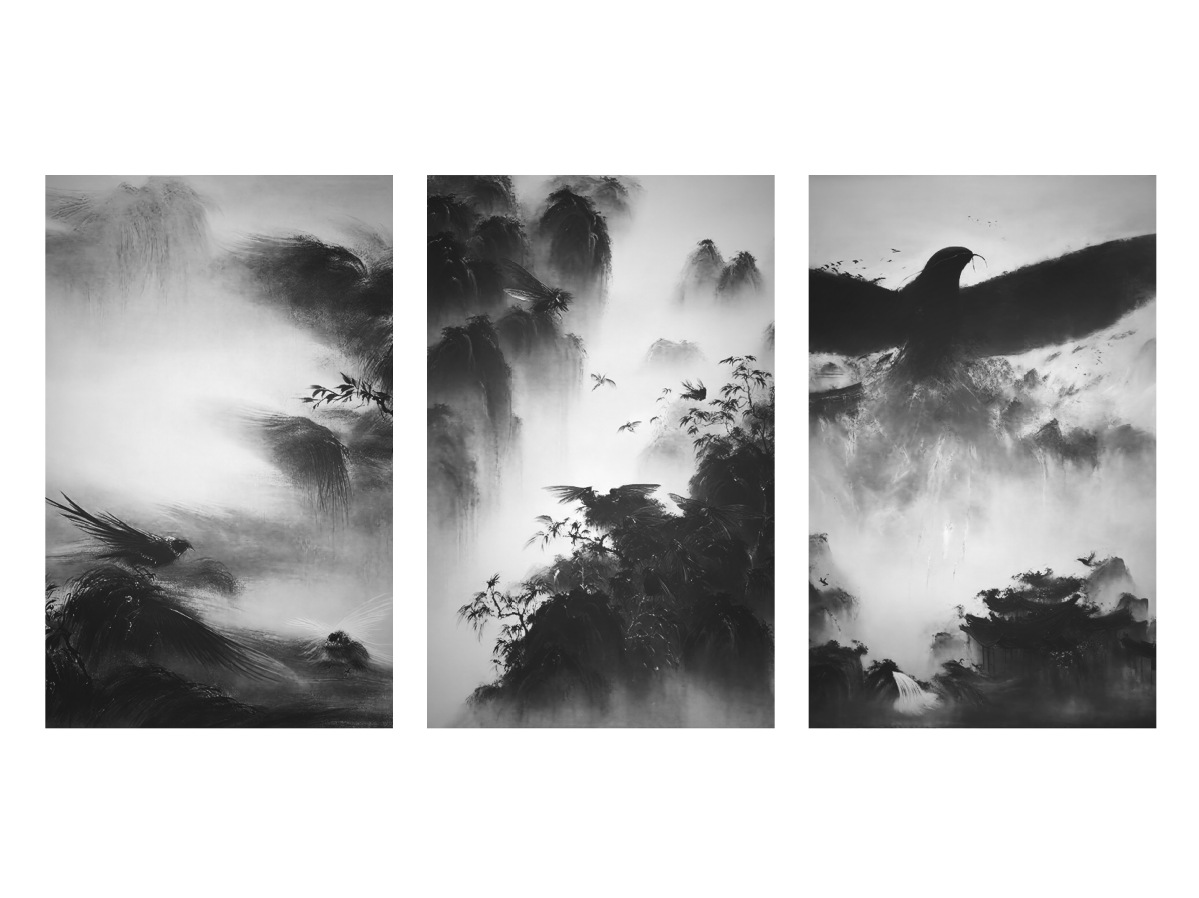
One of the most famous chapters from the "Zhuangzi" is "A Happy Excursion" (Xiaoyaoyou), which uses the imagery of a giant fish transforming into a bird to illustrate the boundless possibilities of life and the importance of transcending mundane concerns. This story serves as a metaphor for the freedom and spontaneity that Zhuang Zi advocates, highlighting the potential for transformation and the joy of following one's true nature.
Influence
Zhuang Zi's influence on Chinese philosophy is profound. His works have inspired countless thinkers and continue to be studied for their depth and insight. The themes and ideas presented in the "Zhuangzi" have transcended cultural boundaries, finding resonance in various philosophical traditions around the world.
Impact on Chinese Philosophy
In China, Zhuang Zi's works have had a lasting impact on various philosophical schools. His emphasis on naturalism and spontaneity has influenced not only Taoism but also aspects of Confucianism and Buddhism. The "Zhuangzi" has been a source of inspiration for scholars, artists, and poets, shaping Chinese cultural and intellectual history.
Influence on Global Thought
Zhuang Zi's philosophical ideas have also influenced global thought, particularly in the areas of existentialism, postmodernism, and environmental philosophy. His concepts of relativity, the unity of opposites, and the interdependence of all things resonate with contemporary discussions on the nature of reality and human existence. Western philosophers and scholars have engaged with Zhuang Zi's works, drawing parallels between his ideas and those found in Western philosophical traditions.
Legacy
Zhuang Zi's legacy is enduring and multifaceted. His philosophical contributions continue to inspire and challenge individuals to reconsider their perspectives on life and the world around them. As a seminal figure in Taoism, Zhuang Zi's works invite readers to embark on their own philosophical journeys, encouraging an exploration of the mysteries and wonders of existence. His writings remain a testament to the richness of Chinese philosophical thought and its capacity to offer profound insights into the human condition.








